Light
Full sun, with 30–50% shade cloth in midsummer. Sunlight paints the colors — too much shade and every cultivar turns plain green.
Gunma Tōhō-en; JIF "Cultivation Guide"Chapter EN — For the World
A 300-million-year-old survivor, refined by Edo-period Japan into a living art form — with its own sumo-style ranking system, published every year since the 19th century. This page tells the whole story in English. 三億年の生命が、江戸の手で生きた芸術になった——その全てを英語で。
Selaginella tamariscina — "Iwahiba" (岩檜葉, "rock cypress-leaf") — is a spikemoss, a lineage older than ferns, older than dinosaurs. When water runs out, it curls its fronds into a tight ball and sleeps. One rain, and it unfurls green again. Ming-era Chinese texts knew it as 長生草 — "the herb of long life", a 1959 Chinese pharmacopoeia still lists it as 九死還魂草 — "the herb that returns from nine deaths", and Edo Japan called it 長生不死草 — "the grass of long life without death". Tachibana & Okamura, Yomigaeru Koten Shokubutsu Iwahiba (1969)
China admired the wild plant as medicine. Only Japan turned it into horticulture — selecting hundreds of named cultivars whose leaves shift from spring green to gold, crimson and purple through the year. Enthusiasts call it "art made by the sun." Japan Iwahiba Federation (www.iwahiba.jp)
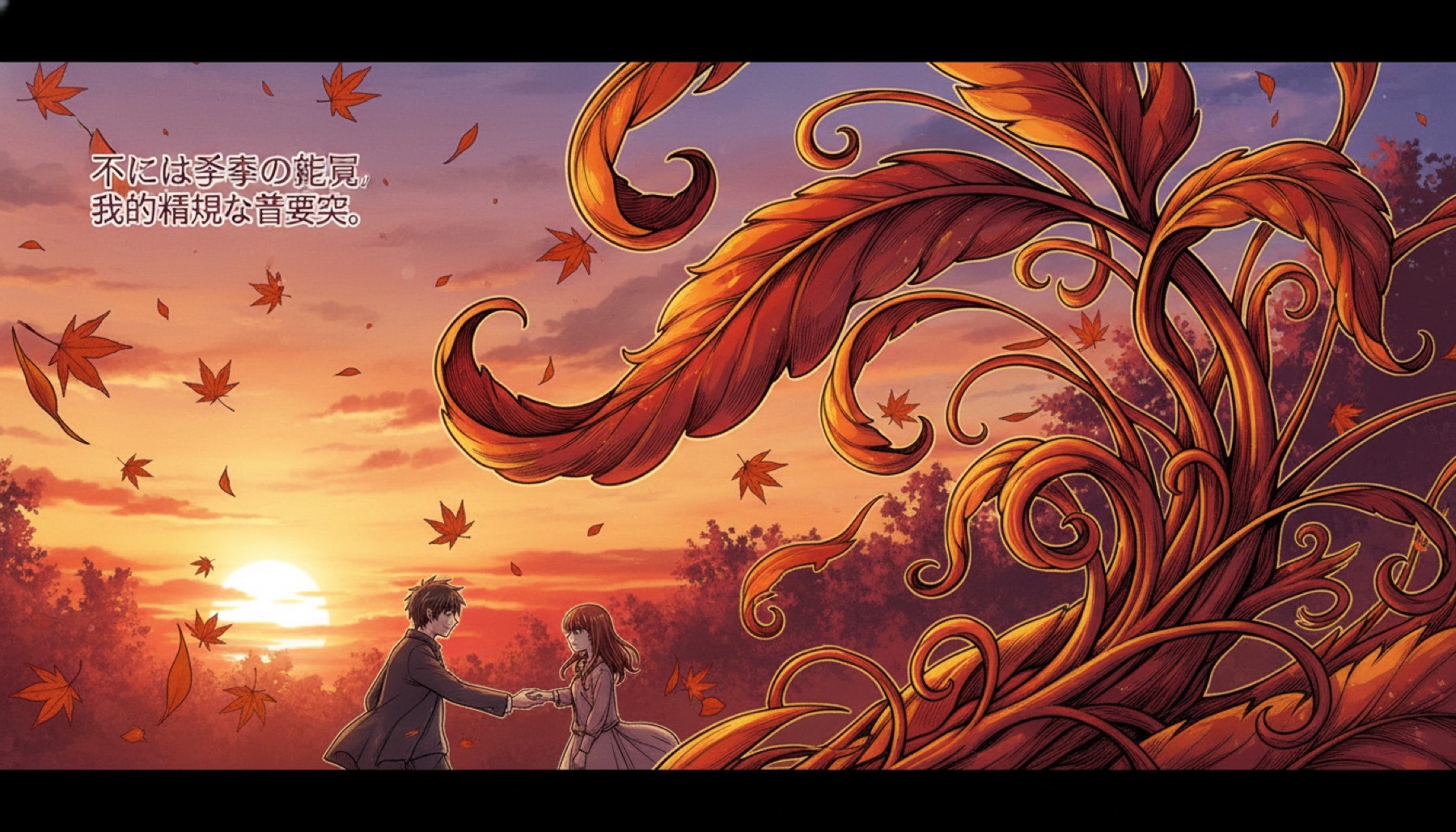
In 1843 — the year of Tenpō 14 — Edo gardeners published the "Tōto Iwahiba Nayose-Torikumi": a ranking sheet of 56 cultivars laid out exactly like a sumo tournament banzuke, the oldest surviving Iwahiba ranking. The custom never died. The Japan Iwahiba Federation (Nihon Iwahiba Rengōkai), founded in 1947 amid postwar scarcity, still publishes its meikan ranking every single year — the 74th edition appeared in 2026. Numao Tsuruo, Iwahiba — Hinshu no Hensen (2001); Japan Iwahiba Federation (2026)
Ranks read from the top: Saikō-kikihin (supreme rare treasure), Zensei-kikihin, Yūshū-kikihin, down to Kihin. The bigger the characters, the higher the rank — just like wrestlers. You can browse 111 archived ranking sheets, from 1930 to 2019, in our Meikan Archive (Japanese page — the sheets speak for themselves). Japan Iwahiba Federation, "This Year's Meikan"
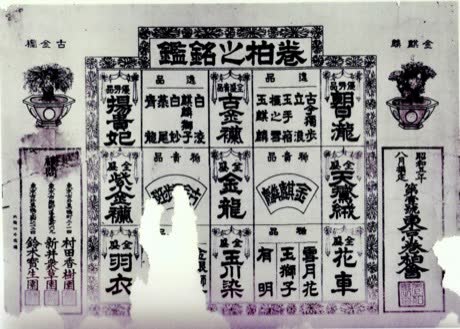
Each cultivar bears a poetic name — Yōkihi (Yang Guifei, the Tang beauty), Ginsekai ("Silver World"), Kinkirin ("Golden Kirin"), Taiheikan ("Crown of Great Peace", named in the hungry years after the war). Researcher Numao Tsuruo traced single cultivars across two centuries of rankings: a plant first drawn in an 1829 woodblock book still grows today under the name Karahana. Names change; the plant, handed from grower to grower, survives. Numao Tsuruo, Iwahiba — Hinshu no Hensen (2001)
Today there are 282 registered cultivars (see the Variety Atlas, Japanese page) — and more than 800 unregistered names recorded at exchange meets and auctions (Unregistered Names, Japanese page), because new varieties are still being born from sports and spore seedlings. Japan Iwahiba Federation; Endo Isao, Unregistered Cultivar Ledgers (2018–2025)
Iwahiba forgives. Forget to water it — it sleeps, and wakes with the next rain. Winter care is literally "dry it, store it, ignore it until cherry blossoms." Yet it also rewards decades: specimens slowly rise on a trunk of woven roots like a bonsai, and hundred-year plants exist, passed between generations. A palm-sized plant is already about ten years old. Japan Iwahiba Federation, "Cultivation Guide"
Full sun, with 30–50% shade cloth in midsummer. Sunlight paints the colors — too much shade and every cultivar turns plain green.
Gunma Tōhō-en; JIF "Cultivation Guide"Once daily in spring/autumn, morning and evening in summer, zero in winter. Overwatering, not drought, is the killer.
JIF "Cultivation Guide"Hard Kanuma pumice (slightly acidic, fast-draining) is the modern standard. Fertilize sparingly — phosphorus/potassium-rich, never heavy nitrogen.
JIF; Iwahiba Sodatekata no Kotsu (Shufunotomo)Magic for beginners: cut a 3 cm frond tip in June, lay it face-down on soil, keep shaded — a new plant sprouts from the leaf tip.
JIF "Cultivation Guide"; Sodatekata no KotsuVisiting Japan? The national exhibition is held every autumn at Jindai Botanical Gardens, Tokyo (Oct 27 – Nov 1 in 2026, free entry with park admission). Thirteen regional chapters — from Miyagi to Shiga — hold spring and autumn shows with sales tables, where growers themselves will teach you. The final-day repotting workshop has even been known to hand out free seedlings. Japan Iwahiba Federation, "National Exhibition" (2026)
Outside Japan? Live plants cross borders only with phytosanitary certificates and your country's import rules — start by checking those before purchasing. Meanwhile, this site's photo archives, rankings and care theory are all here, in full, with sources. The culture travels even when the plants must wait.